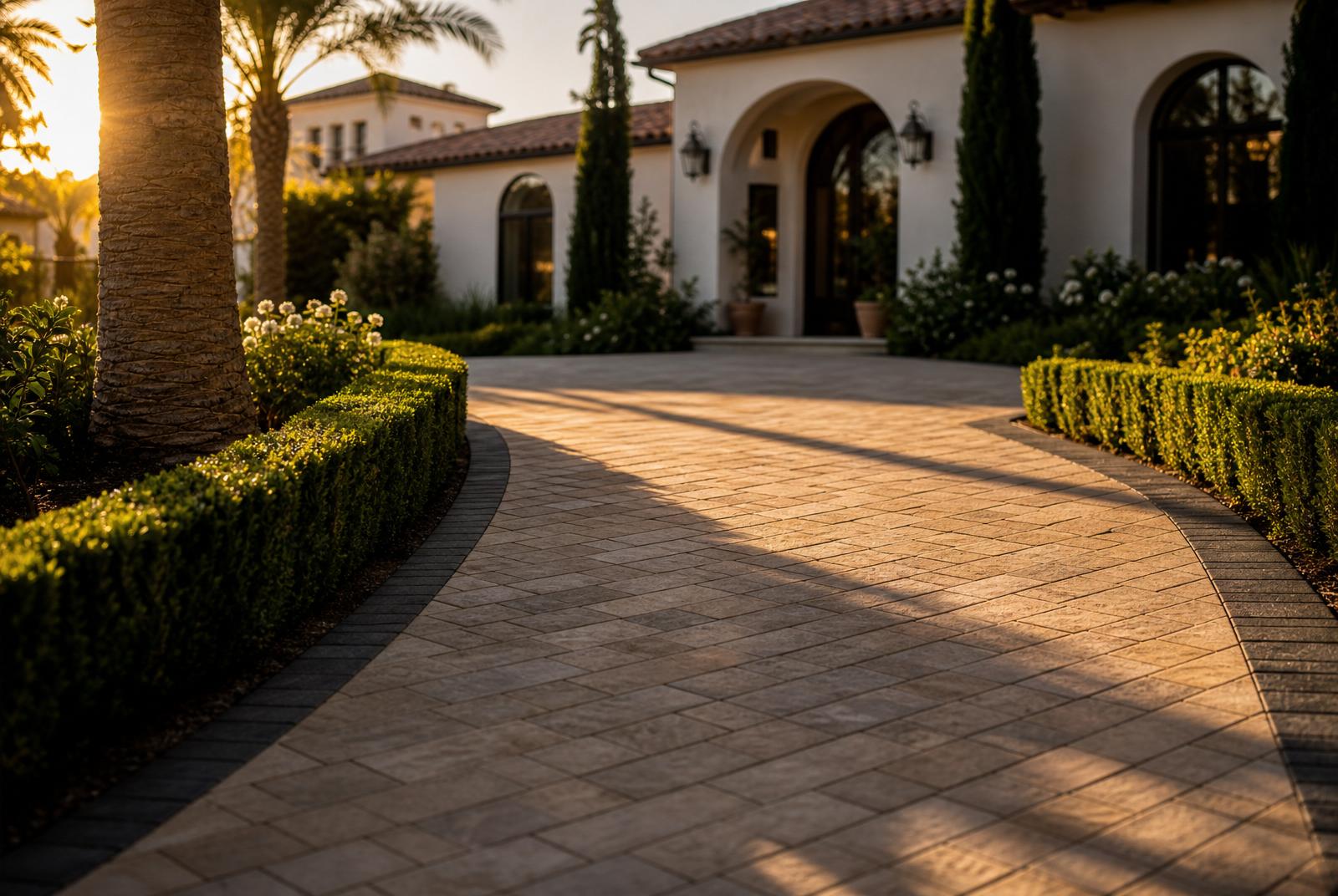
The annual list
Sweep debris off the surface a few times a year. Rinse with a garden hose seasonally. Power-wash on a low-pressure setting once a year — always at a shallow angle to avoid dislodging joint sand. That's the actual annual list.
Joint sand top-up
Polymeric joint sand slowly weathers out over 5-10 years. Topping it up when you see joint depression is a 1-2 hour job and effectively resets the surface to new. This is the single most impactful piece of paver maintenance.
Sealing: usually optional
Concrete, interlocking, and unit pavers with integral color don't need sealing. Sealing changes the sheen and can enhance color depth; it also creates a maintenance obligation. We recommend leaving pavers unsealed unless the client specifically wants a wet-look finish. Flagstone accent bands can be sealed for stain resistance if desired.
Stain response
Fresh spills (oil, wine, tannins) come off with dish soap and a nylon brush within 24 hours. Set stains on unsealed concrete pavers can be lifted with a poultice or, in the worst case, by lifting and rotating the individual paver.
Frequently asked
Straight answers, no sales pitch.
Tap a question to see the full answer.
Continue reading