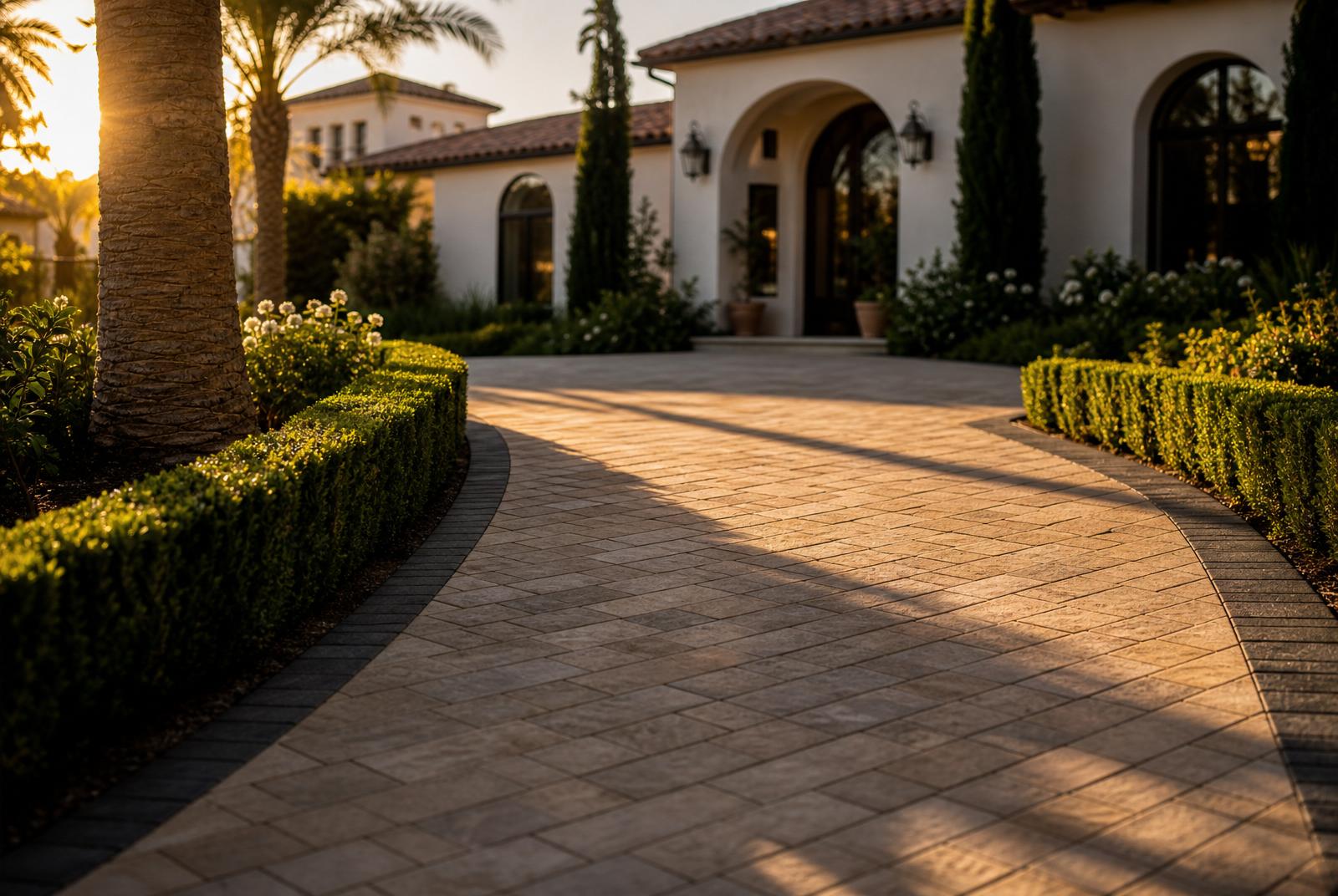
Why Tarzana homes choose pavers over concrete
Tarzana homeowners invest at the top of the market, and their hardscape has to hold that standard for a generation. Poured concrete looks acceptable for the first two seasons, then hairline-cracks under thermal cycling, stains under irrigation and tree drop, and reads as builder-grade the moment the property is photographed. Segmental pavers behave differently: individual units flex with the ground instead of fracturing across it, and any single unit can be lifted and re-set decades later without a demolition scar.
For Tarzana specifically, hillside grades and irrigation loads demand engineered base sections and drainage. We design every Tarzana project around those local conditions, not a generic California spec.
Neighborhoods we build in
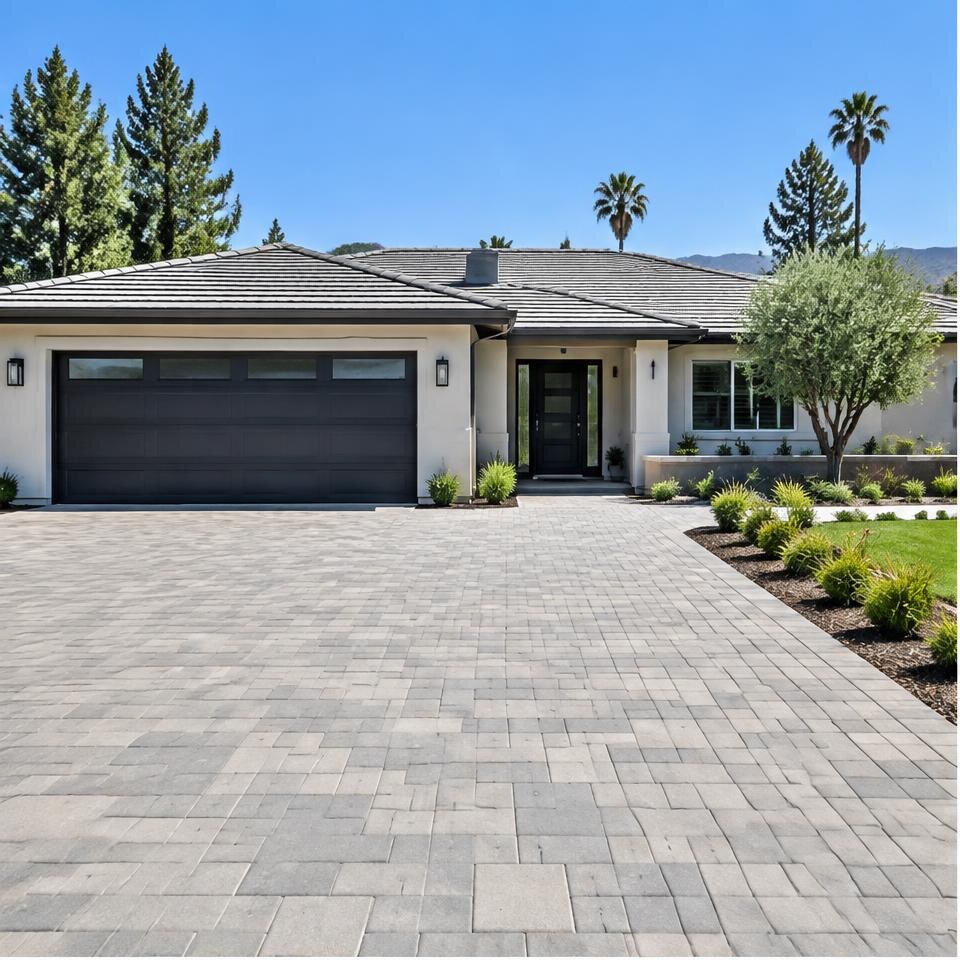
We regularly install in Tarzana Hills, South of the Boulevard, Braemar, and we know the material palettes, setback rules, and street-facing standards that hold in each. Every proposal we submit for a Tarzana home is rendered in 3D, priced line-by-line, and formatted to move through review committees without revision cycles.
- Tarzana Hills
- South of the Boulevard
- Braemar
HOA approvals and permitting in Tarzana
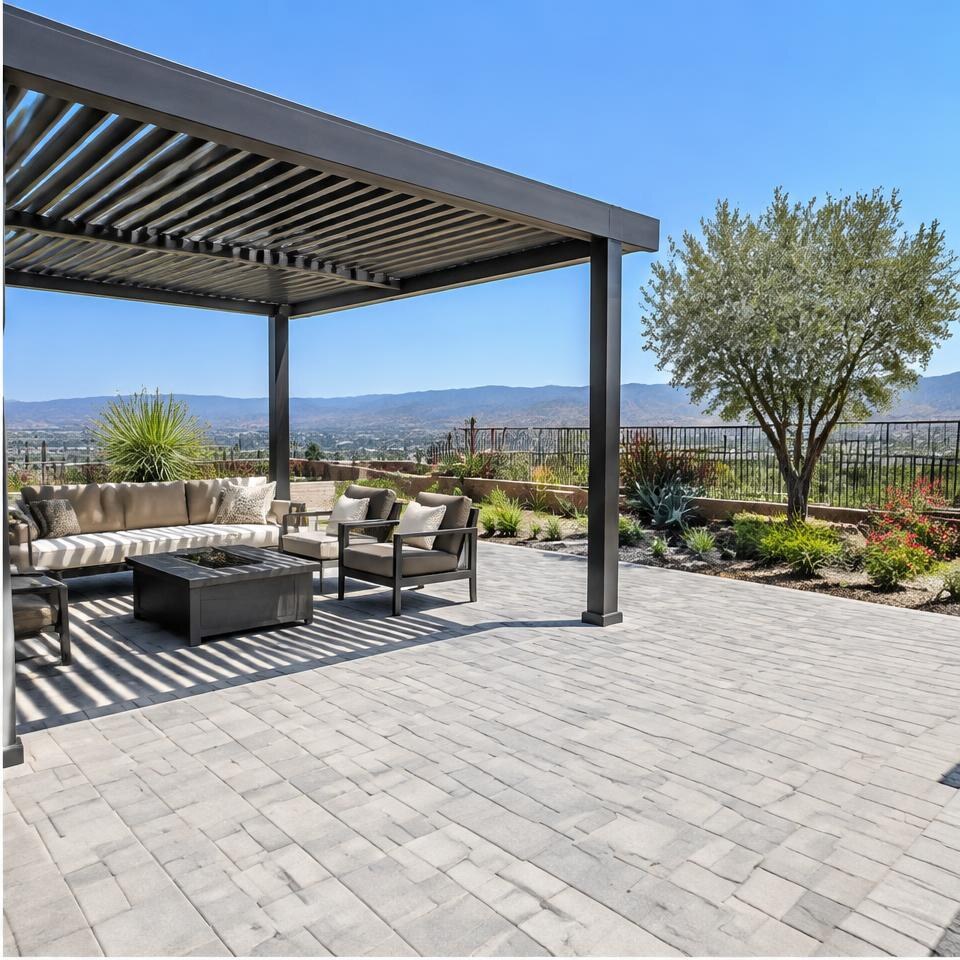
Braemar and hillside overlays trigger design review; we prepare the packages. We produce the drawings, material samples, and specification narratives your association or the local Building & Safety counter expects to see. Because we install exclusively in paver, our submittals aren't recycled from a broader landscape practice — they're purpose-built for the material and the jurisdiction.
Materials and design language for Tarzana
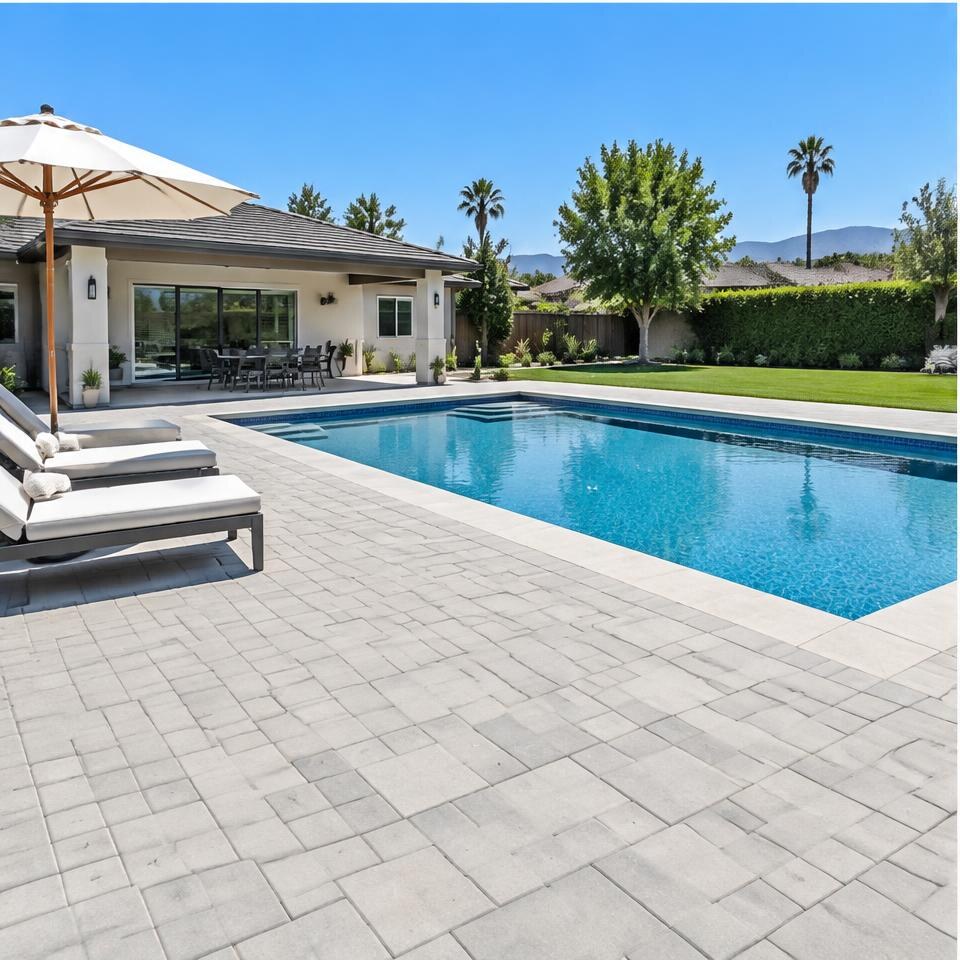
We install concrete pavers, interlocking pavers, unit pavers, and flagstone — sourced from Angelus, Belgard, Orco, Belgard Artforms, and Techo-Bloc. For Tarzana, we typically steer clients toward large-format textured concrete pavers with tumbled edges or a coordinated flagstone accent — finishes that read as architectural rather than suburban. If your home has a defined architectural style, we match paver format, joint width, and border detail to it rather than defaulting to a house pattern.
Engineering standards we install to
Every paver assembly we install in Tarzana follows ICPI (Interlocking Concrete Pavement Institute) standards or better. That means an aggregate base sized to the intended load (driveways receive a 6-to-8 inch Class II base minimum), a screed layer of ASTM C33 bedding sand, precision compaction with a plate compactor rated for the paver, joint stabilization with polymeric sand, and edge restraint at every unsupported perimeter. Where drainage matters — and in Tarzana it usually does — we integrate channel drains, French drains, or a fully permeable base assembly.
Timeline and process
A typical Tarzana driveway or patio project runs 2-4 weeks from contract to completion once material is on site. Design and rendering take one to two weeks up front; production install runs 5-10 working days for most residential scopes. We staff the project with our own W-2 crews — no subcontracted labor — and one project manager owns the site from demo through final walk-through.
Looking for a paver company near you in Tarzana?
We're a paver company — not a landscape generalist who also sets pavers. Paver Exchange runs out of its own yard at 20 N. Aviador St in Camarillo, holds California contractor license #1042565, and is ICPI certified for interlocking concrete pavement. Crews are W-2 employees, one project manager owns your Tarzana site from demolition through final walk-through, and every proposal includes a free photorealistic 3D rendering before you sign. Braemar and hillside overlays trigger design review; we prepare the packages. If you're comparing paver companies serving Tarzana, here's more about how we work and what to ask any contractor.
Every paver service we install in Tarzana
Each of these is a full service with its own crew, spec, and pricing — follow the link for the Tarzana page on that specific scope, with local photos, cost ranges, and FAQs.
- Driveway pavers in Tarzana — motor courts, ribbon drives, and steep approach grades
- Patio pavers in Tarzana — dining terraces, fire features, and shaded yards
- Pool deck pavers in Tarzana — cool-touch, slip-resistant surfaces around existing pools
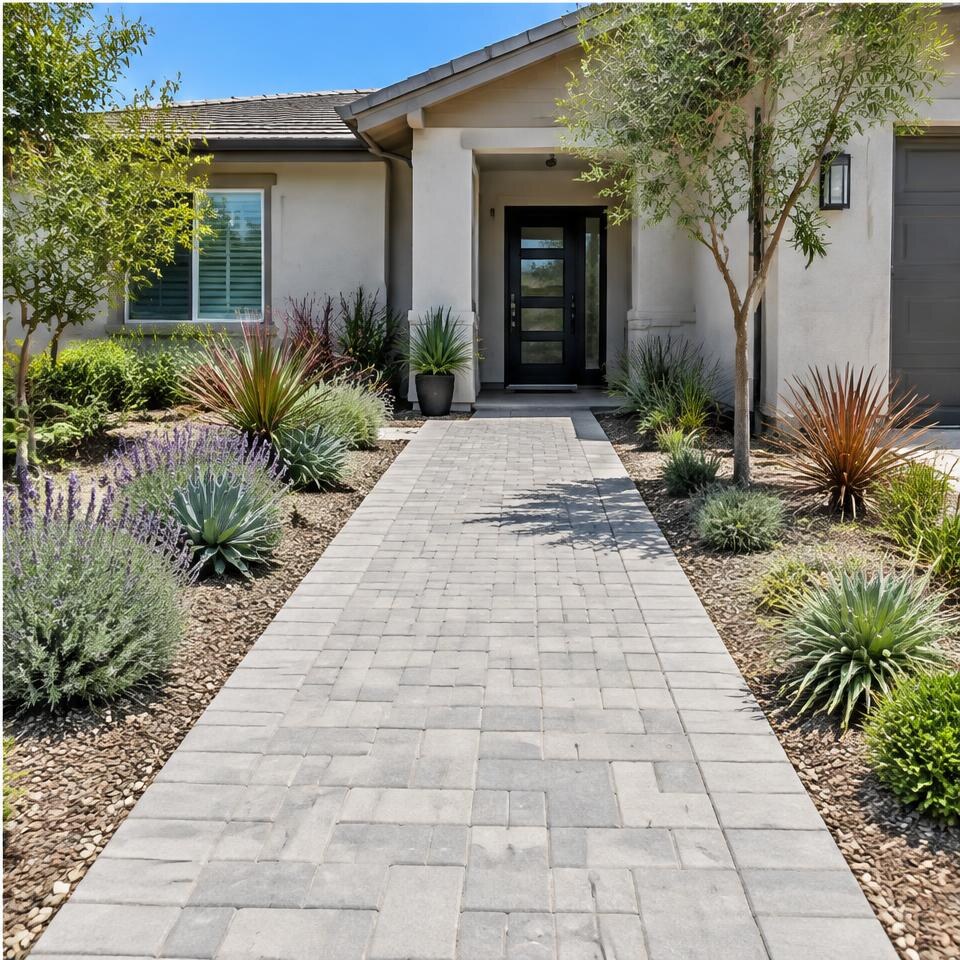
- Walkway pavers in Tarzana — front entries, side yards, and garden paths
- Permeable pavers in Tarzana — irrigation runoff and stormwater compliance
- Steps and planter walls — grade transitions on Tarzana hillside lots
Replacing a concrete driveway or patio in Tarzana
Most of the hardscape we replace in Tarzana is twenty-to-forty-year-old poured concrete: cracked across the field, lifted at tree roots, stained by irrigation, and patched in a lighter gray. A new concrete driveway in Tarzana typically runs $10–$18 per square foot installed and stamped concrete $18–$28, while driveway pavers start around $18 and reach about $35 per square foot on estate or hillside work. The difference buys a surface that flexes with the soil instead of fracturing over it, and that can be lifted and reset unit by unit for decades.
- We demo and haul off the existing slab — never pour over the old surface
- 6–8 inches of compacted Class II base replaces the failed sub-grade
- Tree-root zones get flexible detailing so lifting can be reset, not jackhammered
- Utility trenches can be opened and closed later without a patch scar
- Typical Tarzana concrete-to-paver conversion: 5–10 working days on site
What paver installation costs in Tarzana
Installed paver pricing in Tarzana averages about $18 per square foot and tops out near $35 per square foot on the most demanding estate or hillside work. Price moves with access, demolition, grade change, and paver format — not with your zip code. Every figure below is installed, including base excavation, compaction, edge restraint, jointing, and cleanup.
- Tarzana paver driveway (600–900 sq ft): roughly $11,000–$28,000 installed
- Paver patio (400–600 sq ft): roughly $7,000–$18,000 installed
- Pool deck resurfacing in cool-touch pavers: typically $20–$30 per square foot
- Front entry walkway (120–200 sq ft): typically $2,500–$6,000 installed
- Steps and planter walls: quoted per grade change
Nearby cities we serve in San Fernando Valley
We also install across the rest of San Fernando Valley — including Encino, Sherman Oaks, Studio City, Woodland Hills, Northridge, Van Nuys, Calabasas, Hidden Hills, Toluca Lake, Valley Village, Chatsworth, Granada Hills, Porter Ranch. Same W-2 crews, same 25-year warranty, same design process. If you're comparing Tarzana to a neighboring community, we can price both from the same rendering.
- Encino
- Sherman Oaks
- Studio City
- Woodland Hills
- Northridge
- Van Nuys
- Calabasas
- Hidden Hills
- Toluca Lake
- Valley Village
- Chatsworth
- Granada Hills
- Porter Ranch
Frequently asked
Straight answers, no sales pitch.
Tap a question to see the full answer.
Continue reading