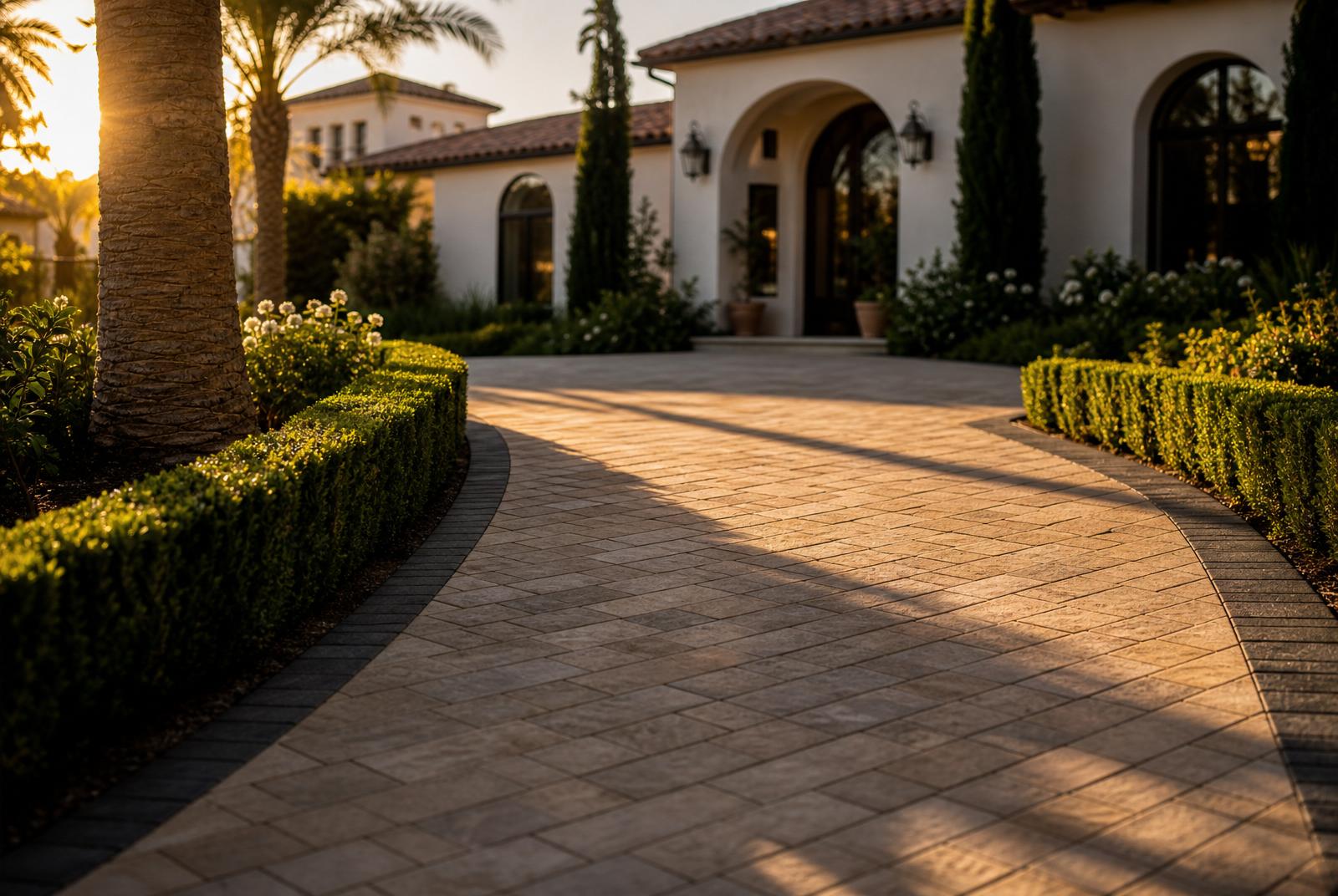
How permeable systems actually work
A permeable paver assembly uses an open-graded aggregate base and wider joint spacing filled with clean stone rather than sand. Stormwater passes through the joints, into the base, and either infiltrates into the sub-grade or is captured by a subsurface drainage system.
Rebates and incentives
Metropolitan Water District's SoCal WaterSmart program, LADWP, MWDOC, and municipal programs in Santa Monica, Long Beach, Pasadena, and San Diego all offer rebates for qualifying permeable hardscape. Rebate rates run $2-$5+ per square foot depending on jurisdiction. We prepare the documentation your program requires.
Where permeable belongs (and doesn't)
Permeable pavers work anywhere ground infiltration is acceptable — driveways, patios, walkways, courtyards. They do not belong directly over expansive clay soils that cannot accept water without settlement risk, or immediately adjacent to foundations without a captured drainage system.
Aesthetic reality
Permeable joints are wider than standard joints. Correctly detailed with clean joint stone, this reads intentional and architectural. Poorly detailed, it reads industrial. Design matters here.
Frequently asked
Straight answers, no sales pitch.
Tap a question to see the full answer.
Continue reading