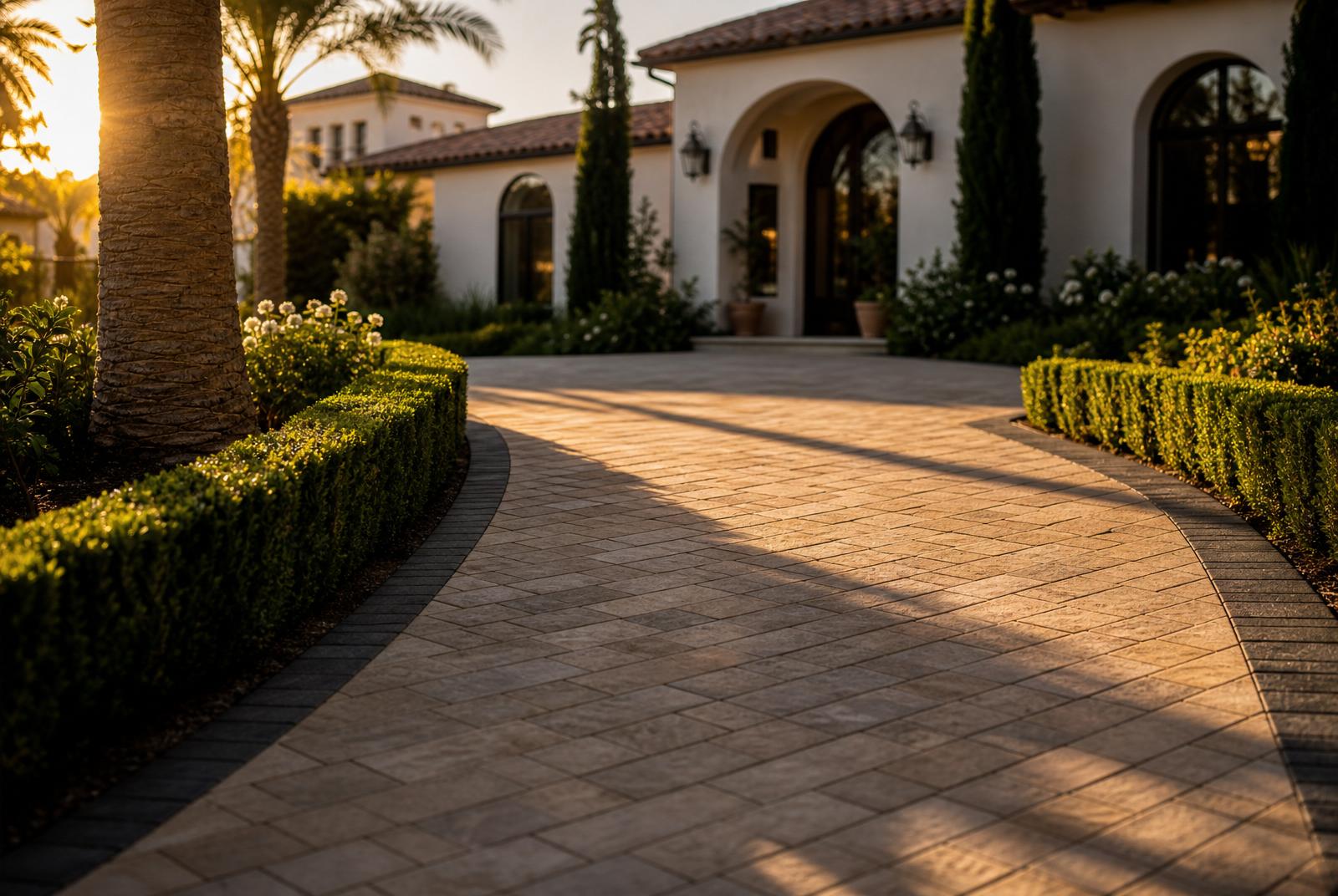
Large-format is the whole game
The single move that separates modern from traditional is paver size. A 24x24 or 24x48 concrete or unit paver reads architectural; a 6x9 tumbled paver reads traditional. If you want modern, start with format.
Ribbon driveways
Two strips of paver running the wheel path, with drought-tolerant ground cover between, is one of the most beautiful — and permeable — driveway typologies available.
Planted joints
A 1-inch open joint filled with dymondia, creeping thyme, or micro-clover between large-format pavers reads modern-Mediterranean and drains rainwater into the ground.
Motor courts
If your parcel supports it, a circular or oval motor court in a single paver material reads more residential-luxury than a linear driveway. Motor courts under 40 feet in diameter usually feel awkward.
Bordering and materiality
One material for the field, one restrained soldier border at the perimeter. Three materials is one too many. Restraint reads expensive; complexity reads busy.
Frequently asked
Straight answers, no sales pitch.
Tap a question to see the full answer.
Continue reading