How permeable pavers work
Water passes through open joints between the pavers, filters down through layers of clean crushed stone, and soaks into the soil underneath. The stone base also stores water during a heavy storm and releases it slowly, so less runoff leaves the property.
What the City of Santa Barbara does
The City's Creeks Division installed permeable pavers at the MacKenzie Park parking lot in 2011 and at Stevens Park, the Westside Neighborhood Center, and Oak Park in 2013. These projects follow the City's Storm Water Management Program, which calls for detaining and treating the runoff from a one-inch, 24-hour storm. Source: City of Santa Barbara Sustainability & Resilience Department, Creeks Division.
When a home project should use permeable pavers
Permeable pavers make the most sense in a few situations.
- Your project adds or replaces a large area of hard surface and the City or County asks for on-site runoff control
- Water ponds on your driveway or runs toward the garage or house
- Runoff from your lot heads into a street, slope, or creek channel
- You want a driveway that drains without a large surface drain system
How we build a permeable driveway
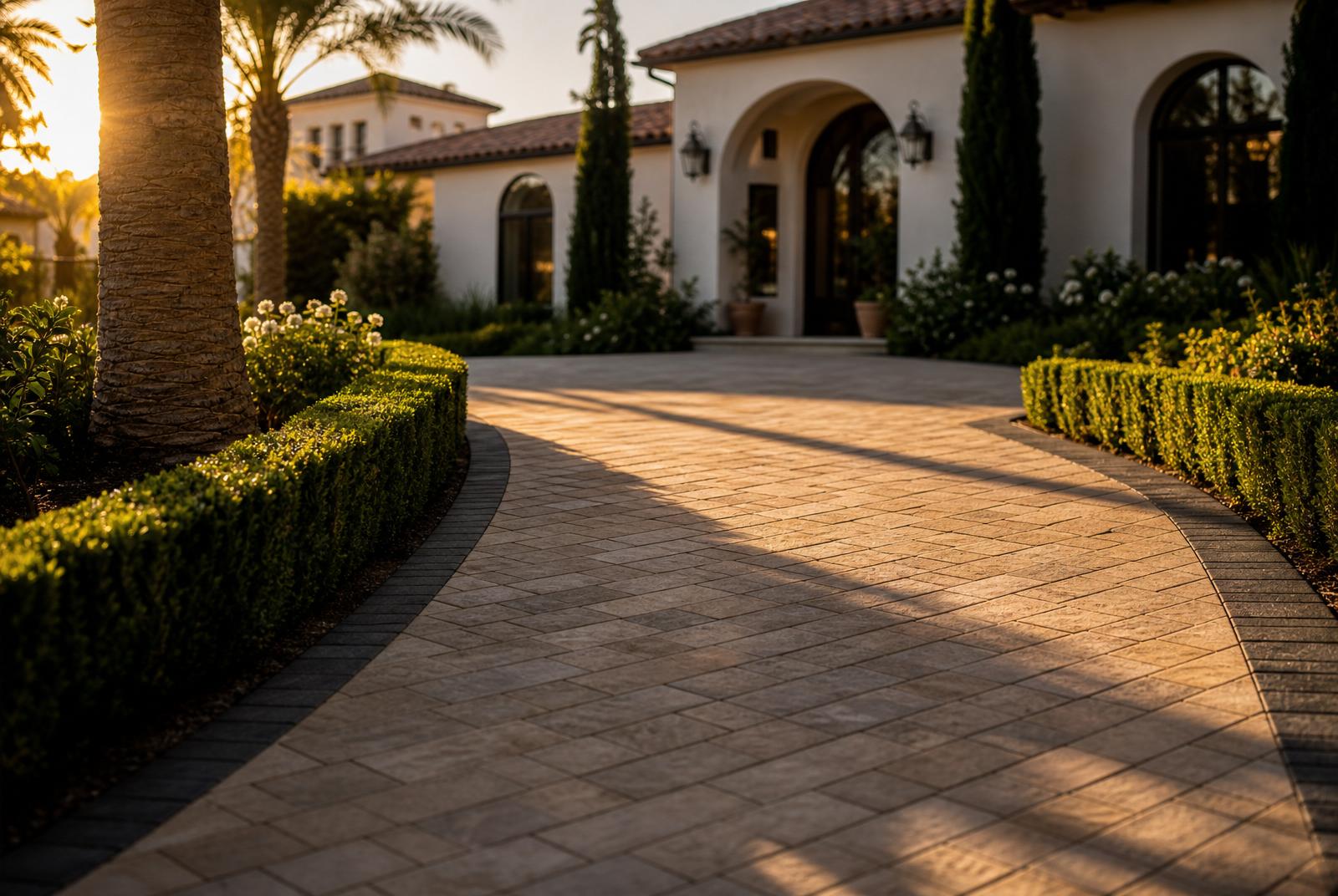
A permeable driveway is built differently from a standard paver driveway. We excavate deeper, install clean open-graded stone in layers instead of dense road base, and fill the joints with small chip stone instead of sand. On clay soils that drain slowly, we can add an underdrain so stored water has a way out.
What it costs
Installed permeable paver work in Santa Barbara County runs about $15–$35 per square foot, toward the upper end because of the deeper excavation and stone base. A 600 square foot permeable driveway typically lands between about $12,000 and $18,000 installed, depending on demolition, access, and slope.
Where we install permeable pavers
We install across Santa Barbara, Goleta, Montecito, Summerland, and Carpinteria. See also paver drainage planning.
Frequently asked
Straight answers, no sales pitch.
Tap a question to see the full answer.
Continue reading