Herringbone — the strongest interlock
45° or 90° herringbone is the most structurally interlocking paver pattern available. It resists vehicle load and lateral shifting better than any other layout, which is why it remains the default choice for luxury paver driveways after decades of use.
Running bond — long, architectural lines
Running bond emphasizes a driveway's length. On large-format pavers (24×24 and up) it reads unmistakably contemporary; on classic 6×9 pavers it reads Belgian-street-cobble.
Basketweave and traditional layouts
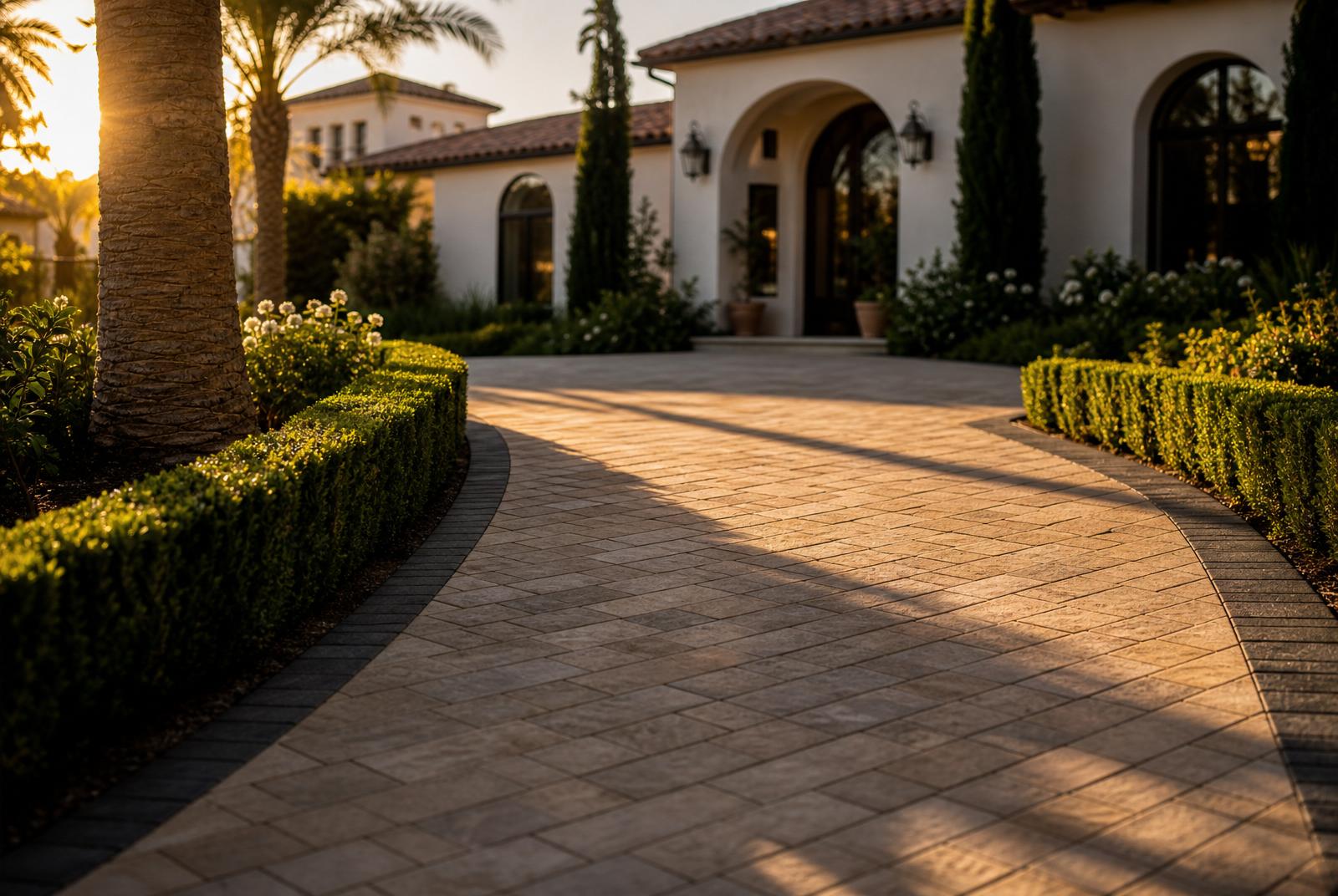
Basketweave and 45° basketweave suit Mediterranean, Spanish Revival, and Tuscan architecture. They read traditional and warm — a poor fit for modern homes.
Circular and radial patterns
Circular paver patterns turn a driveway into a motor court centerpiece. They require a designer who can lay out the radius correctly and a crew comfortable making the compound cuts.
Modern linear and gallery layouts
Large-format pavers laid in single lines with narrow joints, sometimes banded with a contrasting soldier course, read as architecture rather than hardscape. This is the current top-of-market look for new-build modern homes in California.
Frequently asked
Straight answers, no sales pitch.
Tap a question to see the full answer.
Continue reading